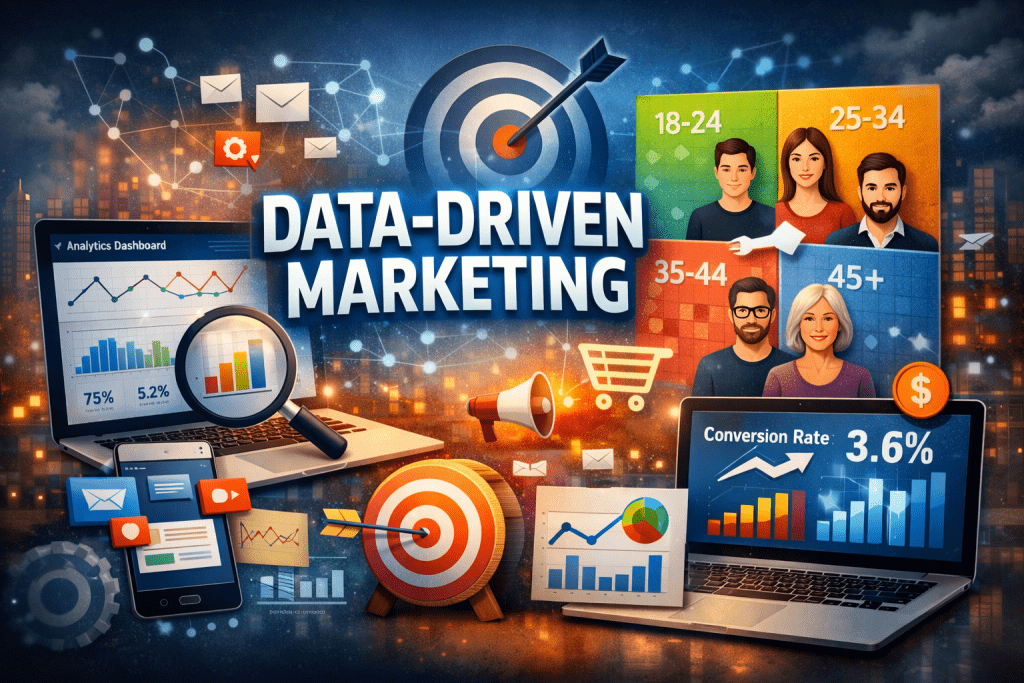
Data-driven marketing is a strategic approach that uses real customer data to guide marketing decisions rather than relying on assumptions or gut instinct. By analyzing information from sources such as website analytics, social media interactions, email performance, customer relationship management systems, and purchase behavior, businesses gain a clearer picture of who their audience is and how they engage.
Instead of guessing what might work, data-driven marketing focuses on evidence. This leads to more accurate targeting, more relevant messaging, and campaigns that are easier to measure and optimize. For growing businesses, it also creates a stronger connection between marketing activity and actual revenue.
Why Data-Driven Marketing Matters Today
Modern consumers expect personalized experiences. They want brands to understand their preferences, anticipate their needs, and communicate in a way that feels relevant. Data-driven marketing makes this possible by turning customer behavior into actionable insight.
When businesses understand how users find their website, which pages they spend time on, or what content drives conversions, they can design marketing strategies that reflect real demand. This not only improves customer experience but also builds trust and loyalty over time.
From a budgeting standpoint, data-driven marketing helps reduce wasted spend. Instead of spreading resources evenly across channels, businesses can invest more heavily in strategies and platforms that consistently perform well.
Key Data Sources Used in Data-Driven Marketing
Effective data-driven marketing relies on combining insights from multiple sources, including:
- Website analytics such as traffic sources, bounce rates, and conversion paths
- Social media metrics like engagement, reach, and audience demographics
- Email marketing performance including open rates, click rates, and conversions
- Customer purchase history and behavior trends
- Advertising platform data from paid search and social campaigns
Tools such as Google Analytics, CRM systems, and marketing automation platforms help centralize this data so it can be analyzed and acted on efficiently.
The Role of Audience Segmentation
Segmentation is one of the most powerful components of data-driven marketing. By grouping audiences based on characteristics such as location, interests, behaviors, or buying patterns, marketers can deliver messaging that feels more personal and timely.
Rather than sending the same message to everyone, businesses can create campaigns designed for specific segments. This leads to higher engagement, stronger conversion rates, and better overall campaign performance. Segmentation also helps identify high-value prospects so marketing efforts can focus on the audiences most likely to convert.
Using Real-Time Data to Optimize Campaigns
One major advantage of data marketing is the ability to react in real time. Performance data can reveal what is working while a campaign is still live, allowing marketers to adjust targeting, creative, or messaging without waiting until the campaign ends.
This flexibility helps prevent missed opportunities. If certain ads or keywords outperform others, budgets can be shifted immediately. If engagement drops, messaging can be refined to better match audience behavior. Real-time optimization keeps campaigns relevant and efficient.
Measuring Performance and Continuous Improvement
Data-driven marketing provides clear visibility into performance. Metrics such as click-through rates, cost per lead, conversion rates, and customer engagement show exactly how campaigns are performing against defined goals.
This creates a continuous feedback loop. Marketers can analyze results, identify areas for improvement, test new approaches, and refine strategies over time. Instead of one-off campaigns, marketing becomes an ongoing process of learning and optimization.
Data-Driven Marketing and Business Growth
At its core, data-driven marketing connects strategy to execution. It aligns marketing decisions with real customer behavior and measurable outcomes. Businesses that embrace this approach are better positioned to scale, adapt to market changes, and outperform competitors who rely on outdated or assumption-based tactics.
By leveraging data effectively, companies gain clearer insights, stronger targeting, and more predictable results. In a competitive digital landscape, data marketing is no longer optional. It is essential for sustainable growth and long-term success.