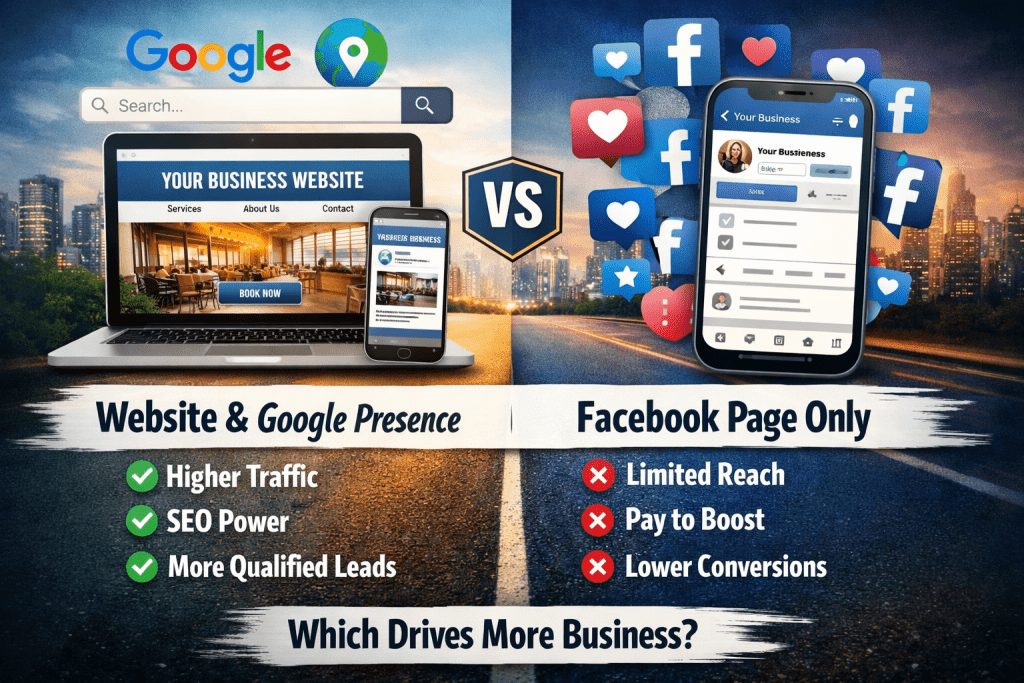
We’ve all been there: You have a problem and need to find a company who can solve it. Where do you go to search for the best business to help you solve this problem? It used to be the yellow pages, or maybe you remember a TV commercial or billboard. Today, however, almost all research is conducted online. Many small businesses start with a Facebook page and assume that’s enough to attract customers. It feels easy, familiar, and free. But the reality is that a Facebook-only strategy drastically limits your visibility, your reach, and ultimately your growth. Having a website vs Facebook only marketing strategy can greatly improve your reach.
If your goal is to generate consistent traffic, qualified leads, and long-term business growth, the difference between relying on Facebook alone versus having a website and a Google presence is significant.
This article breaks down the data behind that difference and explains why businesses that invest in their website consistently outperform those that rely only on social media.
Where Customers Actually Start Their Search
The first thing to understand is how people find businesses today.
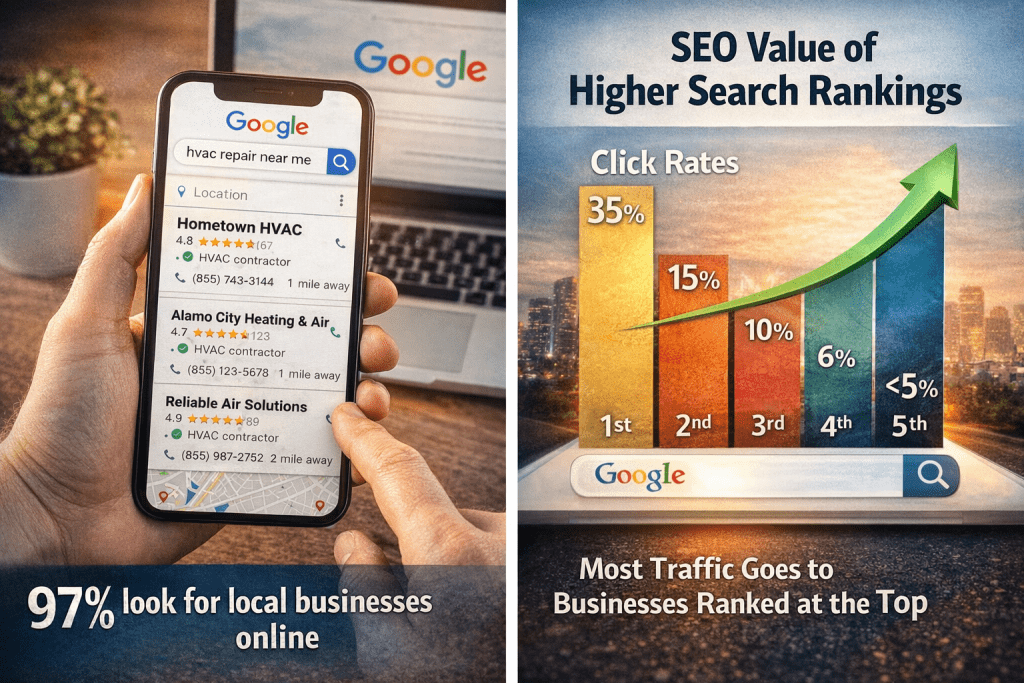
According to BrightLocal, 97% of consumers search online for local businesses before making a decision.
According to Google, more than half of consumers actively research products and businesses online before making a purchase decision, and most buying journeys include multiple online touchpoints.
This behavior happens primarily on Google, not Facebook.
When someone searches for:
- “best HVAC company near me”
- “website designer in Texas”
- “employee engagement platform”
They are using search engines to find solutions, not scrolling through social media hoping to come across one.
A business without a website is largely invisible during this critical moment.
Why a Website Unlocks Search Traffic
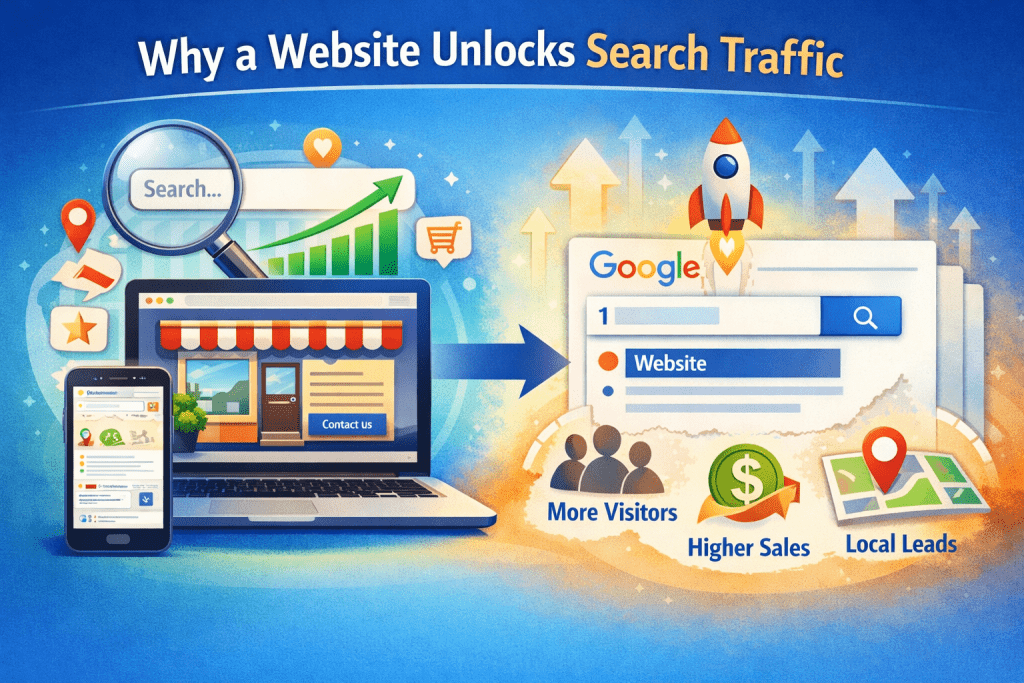
A website allows your business to show up in search results through SEO, which is one of the most powerful drivers of long-term traffic.
Search engines like Google prioritize websites because they provide structured, indexable content that can be ranked based on relevance and authority.
With a properly optimized website, your business can:
- Rank for high-intent keywords
- Appear in local search results
- Capture traffic from people actively looking for your services
Learn more about how this works on our Digital Marketing Services page.
Unlike social media, where visibility disappears quickly, website traffic compounds over time as your content continues to rank.
The Limitations of a Facebook-Only Strategy
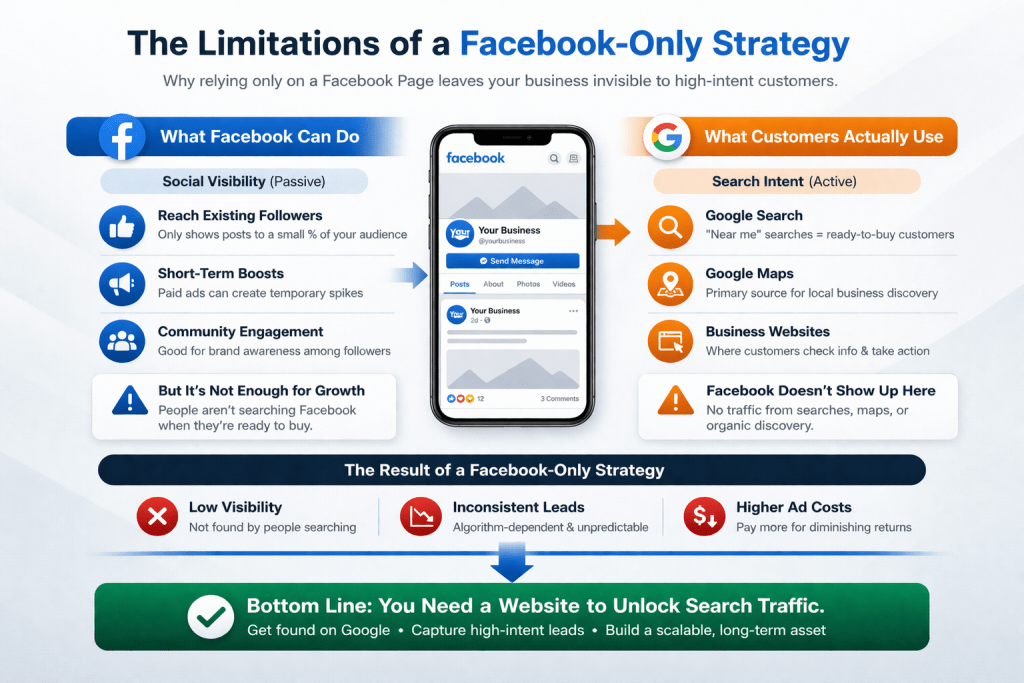
While Facebook can be a useful tool, it comes with significant limitations when used as your primary online presence.
1. Limited Organic Reach
Facebook controls how many people see your content. Even your followers may not see your posts unless you pay for ads.
This means your visibility is restricted by an algorithm you do not control.
2. Low Search Intent
People on Facebook are typically browsing, not searching for a solution. This results in:
- Lower conversion rates
- Less qualified traffic
- More effort required to generate leads
3. No SEO Benefits
A Facebook page does not give you the ability to rank for keywords in the same way a website does. You are not building long-term search equity.
Traffic Differences: Short-Term vs Long-Term Growth
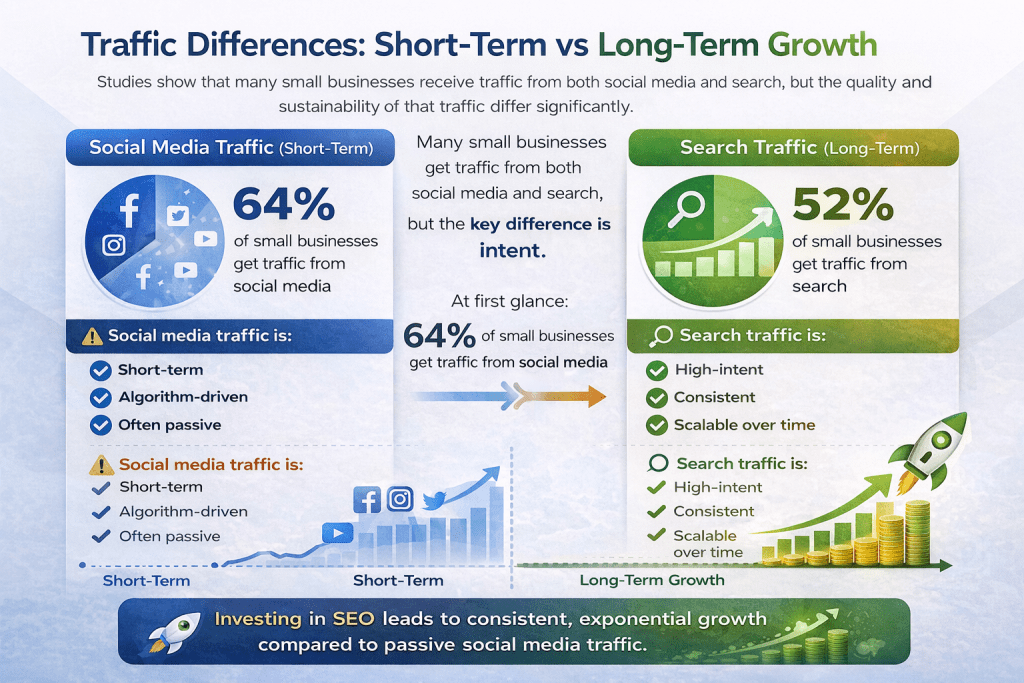
Studies show that many small businesses receive traffic from both social media and search, but the quality and sustainability of that traffic differ significantly.
According to Search Engine Land:
- 64% of small businesses get traffic from social media
- 52% get traffic from search
At first glance, social media appears competitive. However, the key difference is intent.
Social media traffic is:
- Short-term
- Algorithm-driven
- Often passive
Search traffic is:
- High-intent
- Consistent
- Scalable over time
This is why businesses that invest in SEO often see exponential growth compared to those relying only on social platforms.
The Compounding Effect of SEO
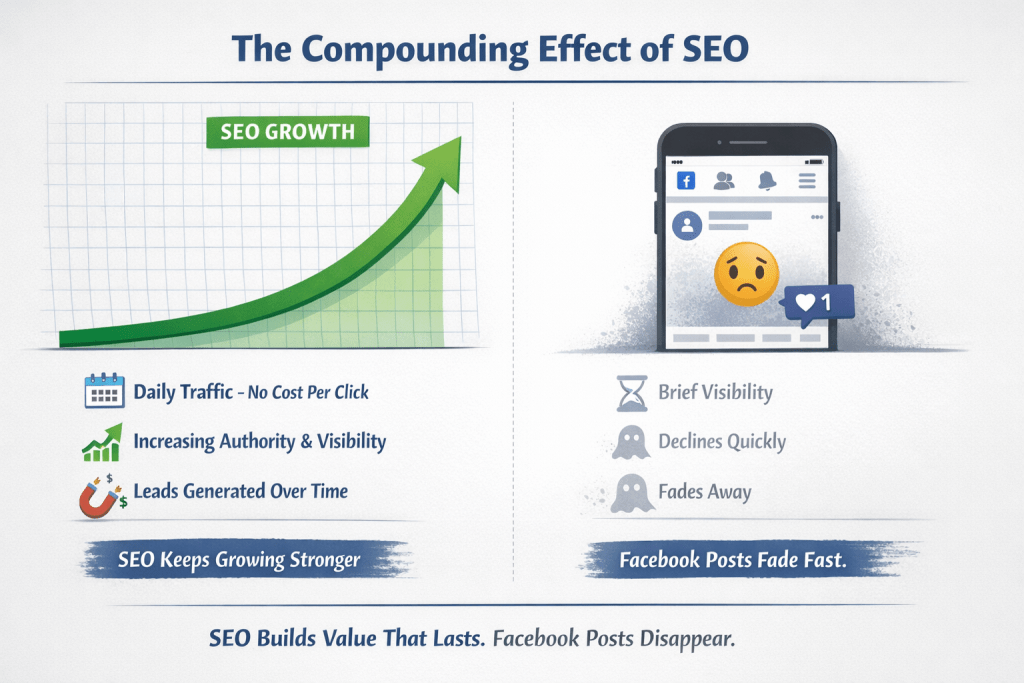
One of the biggest advantages of having a website is the compounding nature of SEO.
When your website ranks for keywords:
- You receive traffic every day without paying per click
- Your visibility increases as your authority grows
- Your content continues to generate leads over time
This is fundamentally different from Facebook, where posts lose visibility within hours or days.
See how we build high-performing websites on our Website Development Services page.
Conversion Rates: Search vs Social
Not all traffic is equal.
Someone searching on Google is actively looking for a solution. Someone on Facebook is typically browsing.
This difference leads to:
- Higher conversion rates from website traffic
- More qualified leads from search
- Better return on investment
In other words, it is not just about more traffic. It is about better traffic.
The Reality: A Website Alone Is Not Enough
It is important to be honest about one thing.
A website by itself does not guarantee traffic.
Some studies show that many small business websites receive fewer than 500 visitors per month if they are not optimized properly.
To truly benefit, your website must be paired with:
- SEO strategy
- Google Business Profile optimization
- High-quality content
- Fast performance and strong user experience
Request a full evaluation of your current online presence through our Free Website Evaluation.
Website vs Facebook: A Simple Breakdown
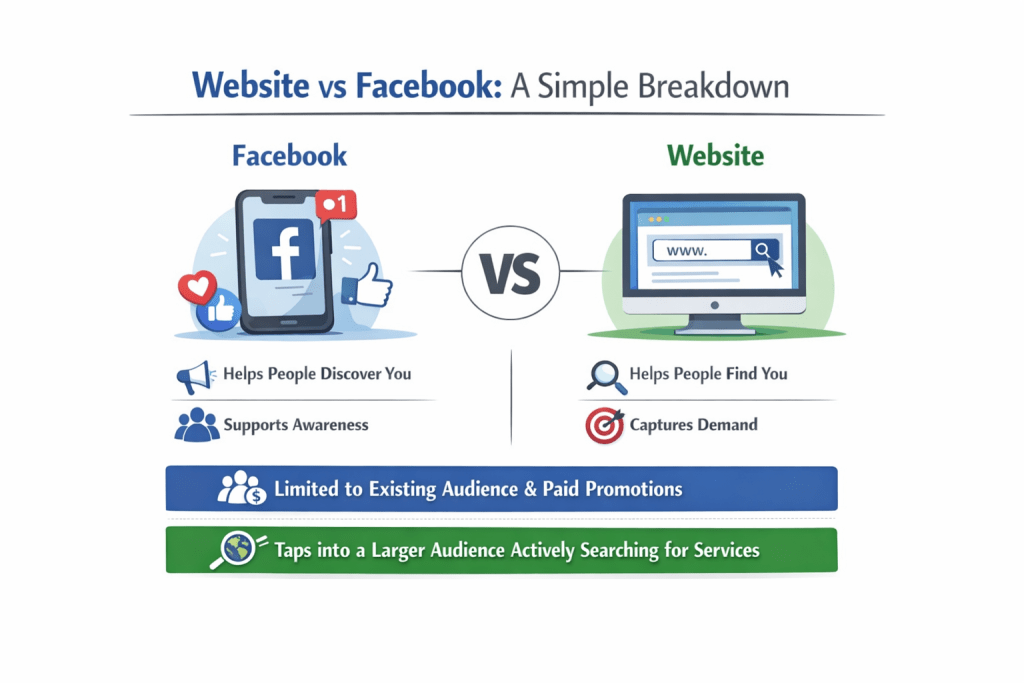
Website vs Facebook: Here’s the easiest way to understand the difference:
- Facebook helps people discover you
- A website helps people find you
Or even more simply:
A Facebook page supports awareness.
A website captures demand.
Businesses that rely only on Facebook are limited to their existing audience and paid promotions.
Businesses with a website and Google presence tap into a much larger audience of people actively searching for their services.
How Much More Traffic Can You Expect?
There is no universal percentage, but the pattern is consistent across industries.
Businesses with a strong website and SEO strategy often experience:
- Multiple times more inbound traffic over time
- More consistent lead generation
- Greater long-term growth potential
The difference is not just incremental. It is foundational.
Final Thoughts
If your business relies only on a Facebook page, you’re missing a major opportunity to connect with customers who are already searching for what you offer.
A website combined with a strong Google presence allows you to:
- Reach a broader audience
- Capture high-intent traffic
- Build long-term visibility and growth
At Hill Country Coders, we focus on building websites that do more than look good. We build platforms that generate traffic, capture leads, and drive measurable results.
Ready to Generate More Traffic?
If you want to see how your current online presence compares, start with a free evaluation.
Request your report here: Free Website Evaluation
Industry Research Sources
Workplace engagement and digital behavior insights referenced in this article on the topic of website vs Facebook are supported by independent research from BrightLocal and Search Engine Land.