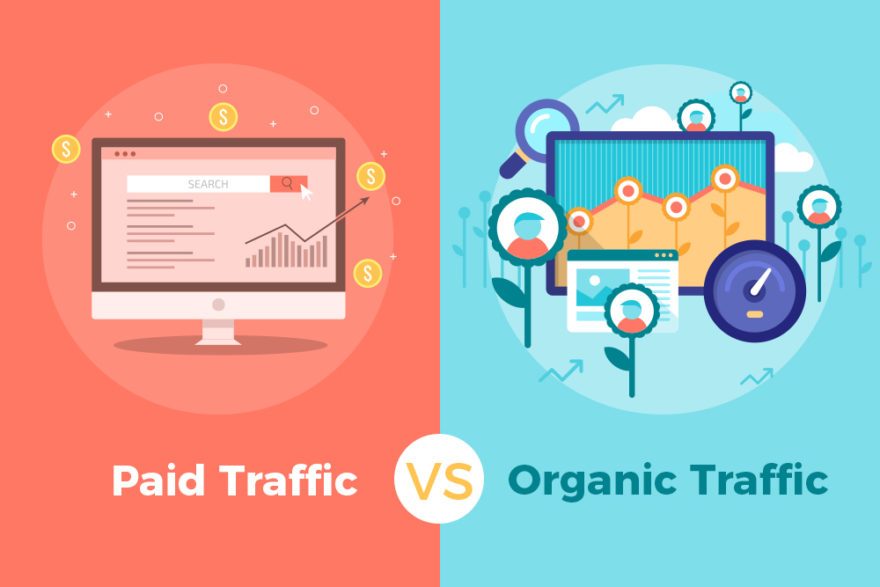
Paid Advertising and Organic Marketing represent two core pillars of digital marketing strategy. While both aim to increase visibility, attract leads, and drive revenue, they differ significantly in execution, timeline, and long-term impact.
Paid Advertising involves investing budget to promote products or services through platforms such as Google Ads, social media advertising, and display networks. These campaigns deliver immediate visibility and allow businesses to target specific audiences with precision.
Organic Marketing, on the other hand, focuses on building long-term visibility and authority without directly paying for placement. Through search engine optimization (SEO), content marketing, and social media engagement, businesses earn attention over time.
Understanding how Paid Advertising and Organic Marketing work together helps businesses create balanced and scalable growth strategies.
How Paid Advertising Drives Immediate Results
Paid Advertising provides fast exposure and measurable performance. Businesses can launch campaigns, target defined audiences, and begin generating traffic almost immediately.
Common Paid Advertising channels include:
Pay-Per-Click (PPC) advertising
Social media advertising
Display advertising
Retargeting campaigns
PPC campaigns on platforms like Google Ads allow businesses to bid on keywords and pay only when users click. This makes Paid Advertising especially effective for capturing high-intent traffic.
Google Ads provides detailed information about how pay-per-click advertising works and how businesses can use Paid Advertising effectively.
Social media ads offer advanced demographic and behavioral targeting, allowing brands to reach users based on interests, location, and engagement patterns. Display ads increase brand visibility through banner placements across relevant websites.
Because Paid Advertising delivers quick feedback through analytics, businesses can optimize campaigns in real time and scale what performs well.
The Long-Term Value of Organic Marketing
Organic Marketing builds credibility and sustainable growth. Rather than paying for immediate exposure, businesses invest in creating high-quality content and optimizing digital assets to attract traffic naturally.
Core components of Organic Marketing include:
Search Engine Optimization (SEO)
Content marketing
Social media engagement
Email marketing
SEO improves visibility in search engine results by optimizing website structure, keywords, and technical performance. Content marketing builds authority by providing valuable information that addresses audience needs.
Although Organic Marketing takes time to gain momentum, it creates lasting benefits such as increased trust, repeat traffic, and stronger brand loyalty.
Comparing Paid Advertising and Organic Marketing
Paid Advertising excels at generating quick traffic and targeting specific audiences. It works well for product launches, seasonal promotions, and competitive keyword targeting.
Organic Marketing builds long-term authority and reduces dependency on ad spend. It strengthens brand perception and generates compounding returns over time.
Businesses that rely solely on Paid Advertising may see strong short-term gains but face higher ongoing costs. Those who focus only on Organic Marketing may struggle to gain traction quickly. A balanced strategy leverages both approaches to maximize growth.
Integrating Paid Advertising and Organic Marketing
The most effective digital marketing strategies combine Paid Advertising and Organic Marketing. Paid campaigns can drive traffic to high-quality organic content, while organic efforts strengthen credibility and improve ad performance.
For example, businesses can use Paid Advertising to promote blog content or downloadable guides, capturing leads that enter long-term nurturing sequences. Meanwhile, strong SEO improves landing page performance and reduces cost per acquisition.
When integrated strategically, Paid Advertising and Organic Marketing support both immediate results and sustainable growth.