
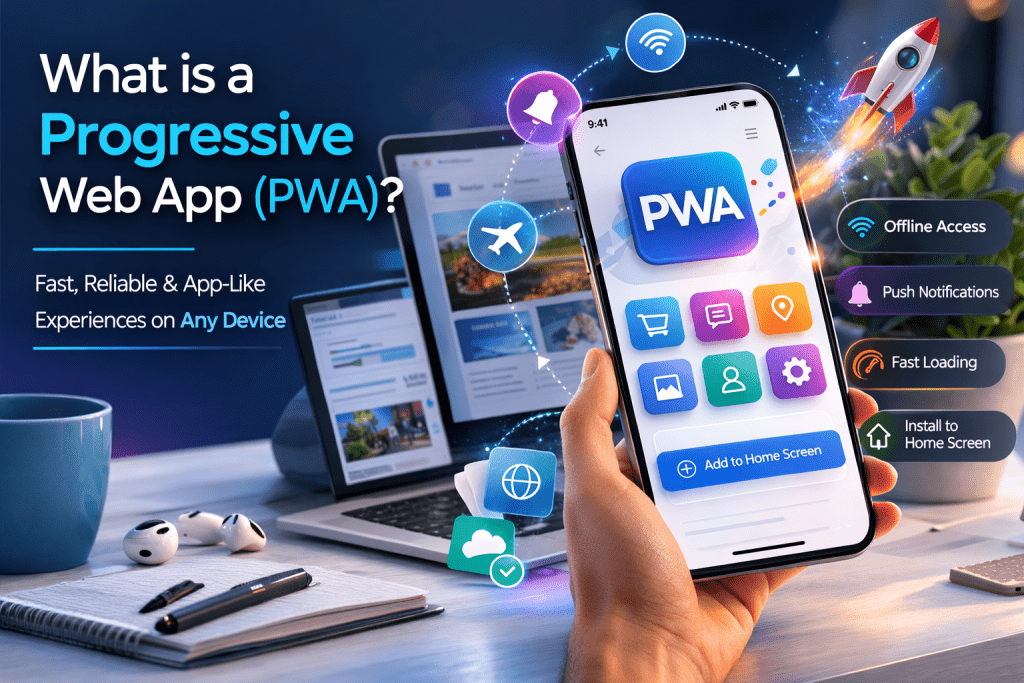
Progressive Web Apps (PWAs) are web-based applications designed to combine the accessibility of traditional websites with the functionality and performance of native mobile applications. Built using modern web technologies such as HTML, CSS, and JavaScript, PWAs run directly in a web browser while offering app-like features including offline functionality, push notifications, fast load times, and the ability to be installed on a device’s home screen.
As mobile usage continues to dominate internet traffic, businesses increasingly look for ways to deliver seamless user experiences across devices. Progressive Web Apps provide an effective solution by allowing companies to deliver high-performance digital experiences without requiring users to download an app from an app store.
PWAs are widely used by e-commerce platforms, news sites, travel services, and productivity tools because they combine speed, reliability, and convenience while remaining cost-effective to develop and maintain.
How Progressive Web Apps Work
Progressive Web Apps rely on several modern web technologies to create their app-like functionality. One of the most important components is a service worker, a background script that allows the application to cache resources and operate even when a user’s internet connection is unstable or temporarily unavailable.
By caching essential files and content locally, PWAs can load significantly faster than traditional websites and continue functioning offline or in low-network environments.
Another key component is the web app manifest, which allows users to install the PWA on their device’s home screen. Once installed, the application launches in a full-screen environment that resembles a native mobile app.
Google provides a detailed technical overview of Progressive Web Apps here.
These technologies work together to deliver a smoother, more responsive experience that keeps users engaged and reduces bounce rates.
The Key Benefits of Progressive Web Apps
Progressive Web Apps offer several advantages for businesses and users alike. Their combination of performance, accessibility, and flexibility makes them an increasingly popular choice for modern digital experiences.
Faster Performance and Improved Speed
One of the most significant benefits of PWAs is speed. Because resources are cached locally through service workers, pages load much faster than traditional websites.
Faster load times improve the overall user experience and can lead to higher engagement, longer browsing sessions, and increased conversions. Website speed is also an important ranking factor for search engines, meaning PWAs can contribute to improved SEO performance.
If you want to learn more about performance optimization, see our guide on website speed and how to improve it.
Offline Access and Reliability
Progressive Web Apps allow users to continue accessing content even when they lose their internet connection. Cached resources allow pages to load instantly, and some features can remain fully functional offline.
This functionality is particularly valuable for industries where users frequently experience inconsistent connectivity, such as travel, transportation, and news media.
By providing uninterrupted access, PWAs improve reliability and user satisfaction.
Push Notifications and User Engagement
PWAs support push notifications, allowing businesses to send updates directly to users’ devices. These notifications can inform users about promotions, product updates, breaking news, or important alerts.
Because notifications appear directly on a user’s device, they can significantly improve engagement and encourage users to return to the application.
When used strategically, push notifications help strengthen customer relationships and increase repeat visits.
No App Store Required
Unlike traditional mobile apps, Progressive Web Apps do not require distribution through app stores such as Apple’s App Store or Google Play. Users can access the app directly through their browser and choose to install it on their device if they wish.
This eliminates many barriers associated with native apps, including:
App store approval processes
Large download sizes
Device storage limitations
Frequent app updates
Users can simply add the PWA to their home screen with a single tap, making adoption quick and frictionless.
Why Businesses Are Adopting Progressive Web Apps
For businesses, PWAs offer a cost-effective way to deliver high-quality digital experiences without maintaining multiple versions of an application for different operating systems.
Instead of developing separate apps for iOS, Android, and desktop environments, companies can maintain a single web-based platform that works across all devices.
This approach reduces development costs while still delivering the performance and engagement typically associated with native apps.
Major brands such as Starbucks, Pinterest, and Twitter have successfully implemented PWAs to improve speed, engagement, and conversion rates. According to Google’s case studies, many companies have seen significant improvements in user retention and performance after adopting PWA technology.
You can review real-world PWA case studies here.
Progressive Web Apps and SEO
Progressive Web Apps also support strong search engine optimization because they are built using standard web technologies that search engines can crawl and index.
Unlike native mobile apps, which often require separate app store optimization strategies, PWAs remain part of the web ecosystem and can appear in traditional search results.
Features such as fast load times, responsive design, and improved user engagement can positively influence search rankings.
If you are interested in improving your website’s search visibility, you may also want to explore our article on the importance of SEO in a competitive digital world.
The Future of Progressive Web Apps
As web technologies continue to evolve, Progressive Web Apps are becoming an increasingly important part of modern digital strategies. They offer the convenience of mobile apps while maintaining the accessibility and discoverability of websites.
With improvements in browser capabilities and growing adoption among major brands, PWAs are likely to play an even larger role in the future of web development.
Businesses that invest in Progressive Web App technology can deliver faster experiences, improve user engagement, and create scalable digital platforms that perform well across devices.
For organizations focused on long-term growth and customer experience, PWAs represent a powerful opportunity to bridge the gap between traditional websites and fully native mobile applications.