
Strategies for Driving Qualified Leads
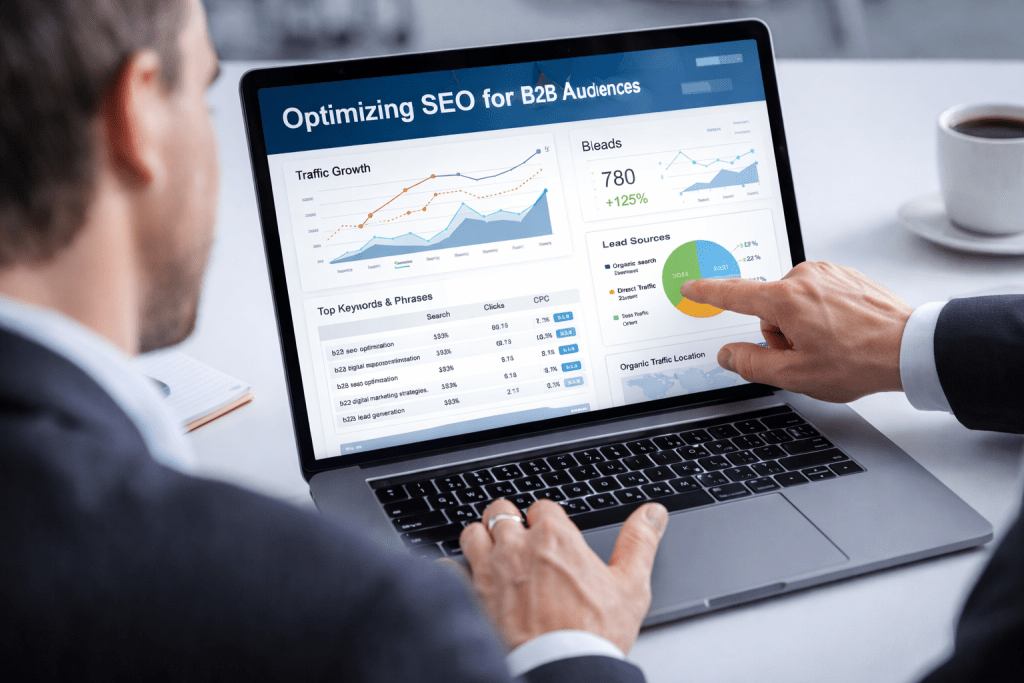
Search engine optimization plays a critical role in helping B2B companies attract qualified leads and build long-term business relationships. Unlike B2C marketing, where the focus is often on broad visibility and quick conversions, B2B SEO requires a more targeted, strategic approach. Decision-makers in B2B industries conduct detailed research before engaging with a vendor, making it essential for your website to provide relevant, high-quality content that aligns with their needs. By optimizing SEO for B2B audiences, businesses can improve visibility among the right prospects, increase website traffic, and generate more meaningful leads that are likely to convert.
Using Targeted Keywords to Optimize SEO for B2B Audiences
One of the most important aspects of optimizing SEO for B2B audiences is keyword selection. B2B buyers typically use highly specific, intent-driven search queries when researching solutions.
Instead of targeting broad keywords, businesses should focus on:
Long-tail keywords
Industry-specific terminology
Solution-based search phrases
For example, rather than targeting a general keyword like “marketing services,” a B2B company might target “B2B digital marketing strategy for SaaS companies.”
These more specific queries attract users who are further along in the buying process and more likely to convert into leads.
Google provides guidance on keyword strategy and search intent. Focusing on precision ensures that your SEO efforts bring in high-quality traffic rather than just high volumes of visitors.
Creating High-Value Content for B2B SEO Success
Content is a central component of any B2B SEO strategy. B2B buyers often require detailed information before making decisions, so your content should educate, inform, and build trust.
Effective content types for B2B audiences include:
In-depth blog articles
Case studies and success stories
White papers and guides
Service and product pages
Well-structured content demonstrates expertise and helps establish your brand as a trusted authority in your industry.
Internal linking also plays a key role in strengthening SEO performance. For example, linking to resources like your website optimization tactics guide or mobile-first design approach article helps search engines understand your content structure while keeping users engaged.
Additionally, external research supports credibility. According to HubSpot, companies that prioritize blogging and content marketing generate significantly more leads than those that do not.
By consistently publishing high-quality content, businesses can improve rankings and nurture prospects throughout the buyer’s journey.
Optimizing SEO with Local Search
Local SEO is often overlooked in B2B marketing, but it can be highly effective for companies that serve specific geographic regions.
Optimizing for local search involves:
Creating and maintaining a complete Google Business Profile
Using location-based keywords
Listing your business in relevant directories
Encouraging client reviews
For example, targeting phrases like “B2B IT services in Dallas” helps connect your business with local companies actively searching for solutions.
Google explains how to improve local SEO visibility. Strong local optimization increases visibility among nearby businesses and improves your chances of generating qualified leads.
The Role of Technical SEO in B2B Performance
Technical SEO is a foundational element of optimizing SEO for B2B audiences. Even the best content will struggle to rank if your website has performance or usability issues.
Key technical SEO factors include:
Fast page load speeds
Mobile responsiveness
Secure HTTPS connections
Clean site architecture
B2B buyers expect efficiency. A slow or difficult-to-navigate website can quickly lead to lost opportunities.
Improving technical performance not only boosts search rankings but also enhances user experience, increasing the likelihood that visitors will stay, engage, and convert.
If you are working on improving performance, you may also want to review your article on website speed and performance optimization for additional insights.
Measuring and Refining Your B2B SEO Strategy
SEO is not a one-time effort. Continuous monitoring and optimization are essential for long-term success.
Key metrics to track include:
Organic traffic
Keyword rankings
Conversion rates
Bounce rates
Time on site
Analyzing these metrics helps identify which strategies are working and where improvements are needed.
Tools such as Google Analytics and Google Search Console provide valuable insights into user behavior and search performance.
You can explore Google’s official analytics tools. By regularly reviewing performance data, businesses can refine their SEO strategies and ensure they continue attracting the right audience.
Why Focusing on B2B Drives Better Results
B2B SEO is about more than just increasing traffic. It is about attracting the right visitors and guiding them through a longer, more complex decision-making process.
When businesses optimize SEO for B2B audiences, they benefit from:
Higher-quality leads
Stronger industry credibility
Improved search visibility
Better alignment with buyer intent
Increased conversion rates
By combining targeted keywords, high-value content, technical optimization, and performance tracking, companies can create a comprehensive SEO strategy that supports long-term growth.