

A successful digital marketing strategy drives measurable revenue by connecting the right audience with the right message at the right time. Many businesses invest in marketing without a clear plan, which leads to inconsistent results and wasted budget.
Building a digital marketing strategy that produces real growth requires focus, data, and execution.
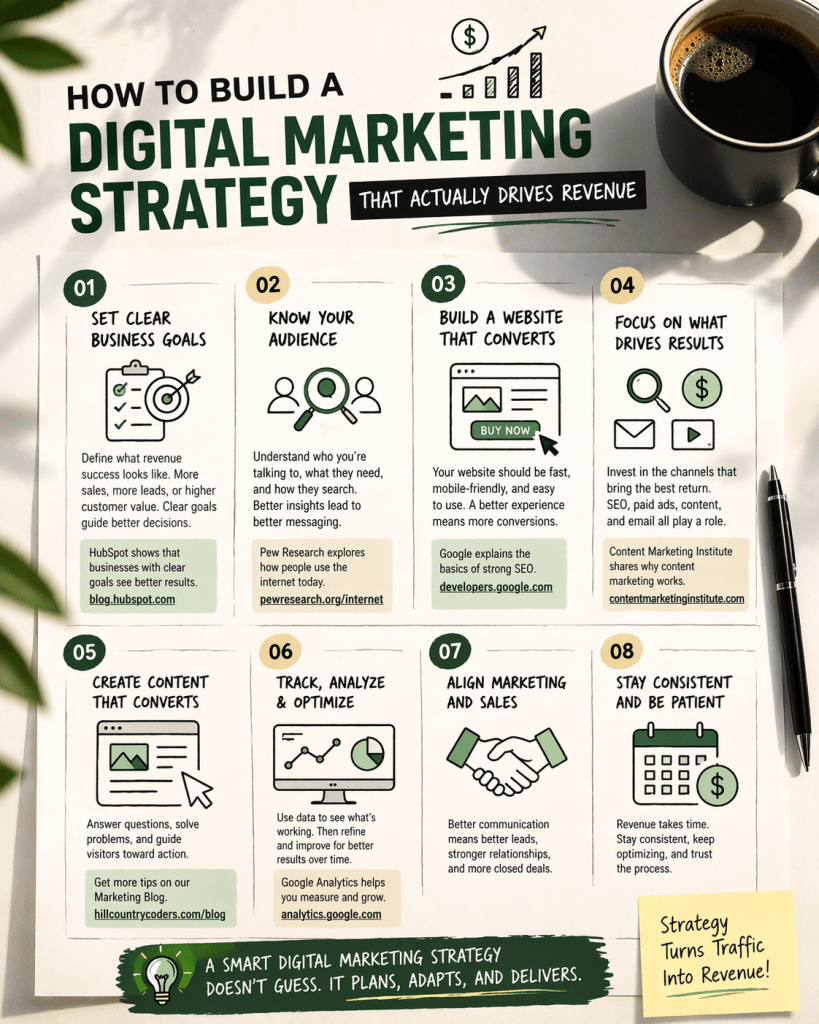
Start with Clear Business Goals
Every effective digital marketing strategy begins with defined goals. Without clear objectives, it is impossible to measure success or make informed decisions.
Your goals should tie directly to revenue. This could include increasing online sales, generating qualified leads, or improving customer retention. According to HubSpot, businesses that set specific marketing goals are significantly more likely to achieve measurable results. You can explore their research on buyer personas and goal setting.
If you are unsure where your current strategy stands, start with a free website evaluation to identify opportunities for improvement.
Understand Your Target Audience
A digital marketing strategy is only as strong as its understanding of the audience. You need to know who your ideal customer is, what problems they are trying to solve, and how they search for solutions.
Use analytics, customer data, and market research to build accurate profiles. Resources like Pew Research Center digital behavior insights can help you better understand how people use the internet.
When your messaging aligns with your audience, engagement and conversions improve.
Build a High-Performing Website
Your website is the foundation of your digital marketing strategy. It should be fast, mobile-friendly, and designed to convert visitors into customers.
According to Google Search Central, site performance and usability play a major role in search rankings and user experience. Learn more about SEO fundamentals.
If your website is not performing, it will limit every other marketing effort. Improving speed, navigation, and structure can significantly increase conversions. Learn how to improve your site with our web development solutions.
Focus on Revenue-Driving Channels
Not every marketing channel will deliver the same results. A strong digital marketing strategy prioritizes the channels that generate the highest return.
Key channels to consider include:
- Search engine optimization for long-term traffic
- Paid advertising for immediate visibility
- Content marketing for authority and trust
- Email marketing for nurturing leads
According to Content Marketing Institute, businesses that invest in content marketing generate more leads at a lower cost. You can read more about content marketing effectiveness.
Create Content That Converts
Content should do more than attract visitors. It should guide them toward action.
This means creating content that:
- Answers common questions
- Addresses customer pain points
- Builds trust and credibility
- Encourages next steps
For additional insights, explore our marketing blog where we break down strategies for creating high-performing content.
Track Data and Optimize Continuously
A digital marketing strategy is never static. It requires ongoing analysis and adjustment.
Tracking tools such as Google Analytics provide valuable insights into user behavior, traffic sources, and conversions. You can learn more about Google Analytics features.
By reviewing your data regularly, you can identify what is working and refine your approach to improve results.
Align Marketing with Sales
One of the most overlooked aspects of a digital marketing strategy is alignment between marketing and sales. Marketing should generate qualified leads, and sales should convert those leads into customers.
Clear communication between these functions ensures that:
- Leads are properly qualified
- Messaging is consistent
- Opportunities are not missed
When marketing and sales work together, revenue growth becomes more predictable.
Stay Consistent and Patient
Building a successful digital marketing strategy takes time. Results do not happen overnight, but consistent effort leads to long-term growth.
Stay focused on your goals, continue producing valuable content, and use data to guide your decisions.
Final Thoughts
A strong digital marketing strategy is built on clear goals, audience understanding, high-performing technology, and consistent execution. Businesses that focus on these fundamentals are better positioned to drive traffic, convert leads, and increase revenue.
If your current efforts are not producing results, it may be time to reevaluate your approach and build a strategy that is designed to grow with your business.