
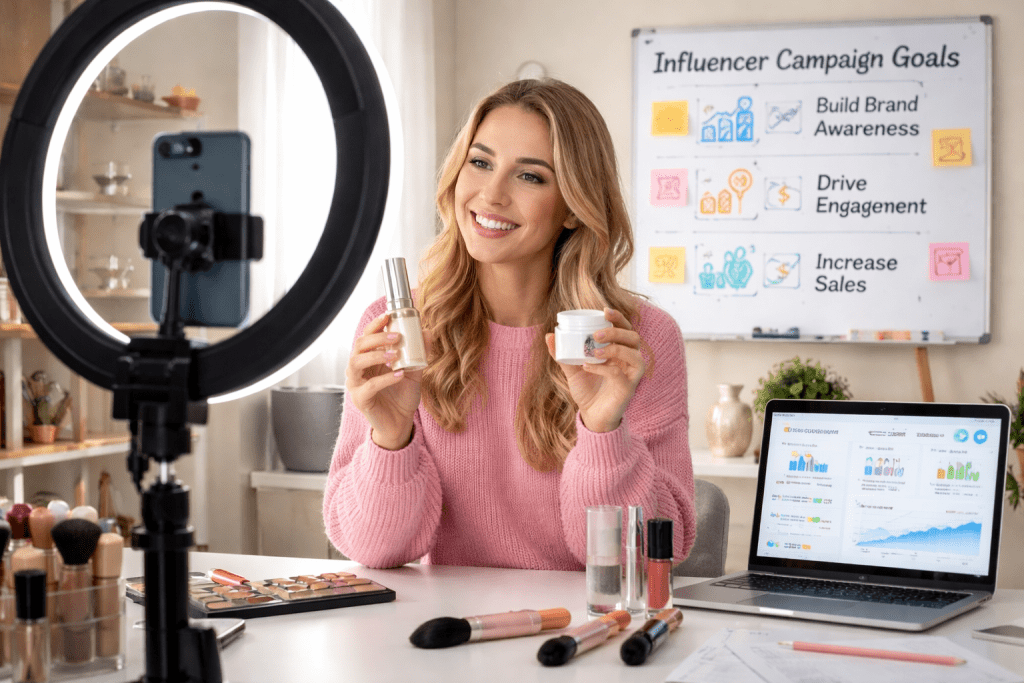
Launching a successful influencer marketing campaign starts with one critical step: defining clear, measurable goals. Without a clear direction, even the most creative campaigns can fall short of delivering meaningful results. By setting clear goals for your influencer campaign, you establish a foundation that guides influencer selection, content strategy, and performance tracking.
Whether your objective is to build brand awareness, drive engagement, or increase sales, clearly defined goals ensure that every aspect of your campaign is aligned with your broader business strategy.
Why Setting Clear Goals for Your Influencer Campaign Matters
Influencer marketing is an investment, and like any investment, it should deliver measurable returns. Setting clear goals helps you determine what success looks like and how to achieve it.
When goals are clearly defined, you can:
Choose the right influencers
Create targeted content
Measure campaign performance accurately
Optimize future campaigns
Without clear objectives, it becomes difficult to evaluate whether your campaign is effective or how to improve it.
According to research from Influencer Marketing Hub, brands that define campaign goals upfront are significantly more likely to see positive ROI from influencer partnerships.
Common Goals for Influencer Marketing Campaigns
Different campaigns require different objectives, and your goals should reflect your business needs. Some of the most common goals include:
Building Brand Awareness Through Influencer Campaigns
If your goal is to increase visibility, your focus should be on reaching a broader audience. This often involves partnering with influencers who have large followings and strong reach.
Brand awareness campaigns prioritize impressions, reach, and follower growth rather than direct conversions.
Driving Engagement with Influencer Content
Engagement-focused campaigns aim to generate likes, comments, shares, and interactions. These campaigns help build relationships with your audience and increase brand visibility through algorithm-driven platforms.
Content that encourages interaction, such as polls, questions, or challenges, tends to perform well for engagement goals.
You can strengthen engagement further by combining influencer efforts with a structured posting plan. Learn more in our article on why you need a social media content calendar.
Generating Leads and Conversions
For businesses focused on growth, lead generation and sales are often the primary objectives. Influencers can drive conversions through:
Affiliate links
Discount codes
Landing page promotions
These campaigns require clear calls to action and often benefit from working with influencers who have highly engaged, niche audiences.
If your goal is conversion-focused, pairing influencer campaigns with website optimization tactics can significantly improve results.
Aligning Influencer Selection with Campaign Goals
Your goals should directly influence the type of influencers you choose to work with.
For example:
Macro-influencers are ideal for brand awareness campaigns due to their large reach
Micro-influencers are effective for engagement and niche targeting
Industry experts are valuable for building credibility and trust
Choosing the right influencer ensures that your message reaches the right audience and aligns with your campaign objectives.
A report by HubSpot Marketing Statistics highlights that micro-influencers often generate higher engagement rates than larger influencers, making them particularly valuable for targeted campaigns.
Setting Measurable KPIs for Influencer Campaign Success
To effectively evaluate your campaign, you need to define key performance indicators (KPIs) that align with your goals.
Common KPIs include:
Reach and impressions
Engagement rate
Click-through rate
Conversion rate
Cost per acquisition
Tracking these metrics allows you to measure success and identify areas for improvement.
Tools such as Google Analytics can help you monitor traffic and conversions generated from influencer campaigns.
By analyzing performance data, businesses can refine their strategies and improve future campaign outcomes.
How Clear Goals Shape Your Content Strategy
Your campaign goals should also guide the type of content you create.
For example:
Awareness campaigns may focus on storytelling and lifestyle content
Engagement campaigns may include interactive posts or challenges
Conversion campaigns should highlight benefits, offers, and clear calls to action
Content that aligns with your objectives is more likely to resonate with your audience and deliver results.
If you are developing a broader content strategy, consider how influencer marketing fits within your overall content marketing approach to maintain consistency across channels.
Why Setting Clear Goals for Your Influencer Campaign Drives Results
Influencer marketing can be incredibly effective, but only when it is executed with purpose. Setting clear goals ensures that every decision, from influencer partnerships to content creation, contributes to a defined outcome.
When businesses take a strategic approach, they benefit from:
Improved campaign performance
Better alignment with business objectives
More efficient use of marketing budgets
Stronger audience engagement
Higher conversion rates
By establishing clear goals from the beginning, you create a roadmap that leads to measurable success and long-term growth.