
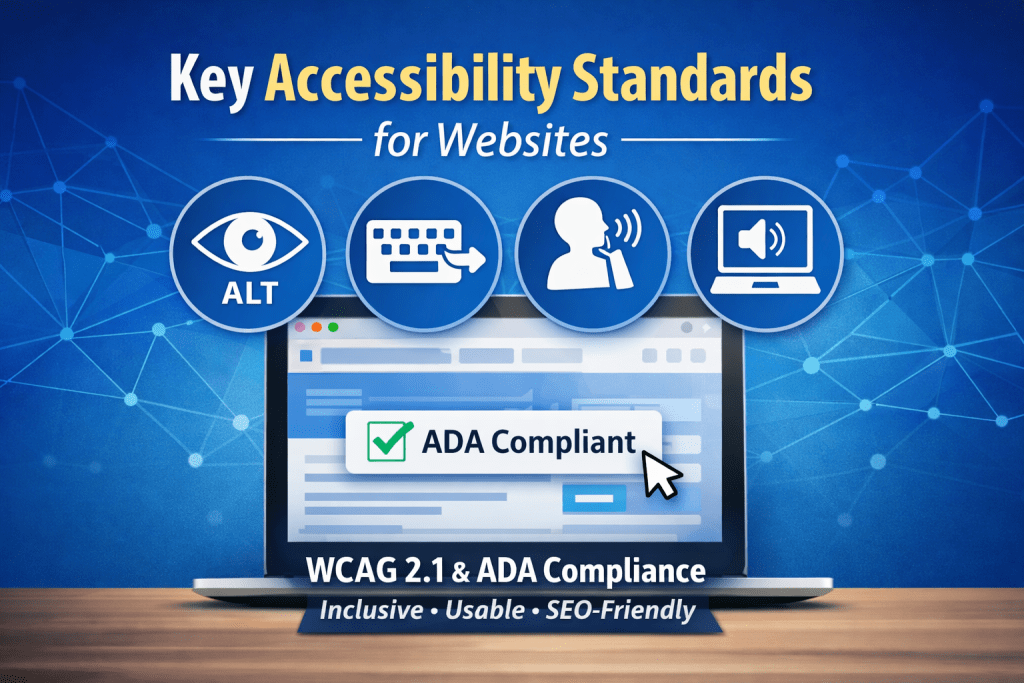
Creating a website that meets modern key accessibility standards is essential for both compliance and performance. Accessibility is guided by the Web Content Accessibility Guidelines (WCAG) 2.1, developed by the World Wide Web Consortium (W3C). While the ADA does not define exact technical requirements, WCAG provides a clear framework for building inclusive, user-friendly digital experiences.
If you are looking to improve your website’s performance and visibility, accessibility plays a direct role in both user engagement and search engine rankings. Learn more about our Digital Marketing and Development Services here: Hill Country Coders Services
Perceivable Content Improves User Experience and SEO
Perceivable content ensures that all users can access and understand information on your website. This includes:
- Adding descriptive alt text to images
- Providing captions and transcripts for videos
- Designing adaptable layouts for different devices and abilities
These practices not only support accessibility but also enhance SEO by helping search engines better understand your content. For official WCAG guidance, visit:
WCAG 2.1 Guidelines
Operable Websites Increase Engagement Through Key Accessibility Standards
An operable website allows users to navigate and interact with content regardless of physical ability. Key elements include:
- Full keyboard navigation functionality
- Clear focus indicators for interactive elements
- Logical tab order across pages
Improving operability reduces friction, increases time on site, and improves conversion rates. If your website is difficult to navigate, you risk losing both users and rankings. You can explore how we optimize usability on our About page: About Hill Country Coders
Understandable Design Builds Trust
Understandable websites are consistent, predictable, and easy to follow. This includes:
- Clear instructions and calls to action
- Consistent navigation and labeling
- Helpful error messages and form validation
When users understand how to interact with your site, they are more likely to engage, convert, and return.
Robust Content Supports Future Technology
Robust content ensures compatibility with assistive technologies such as screen readers, braille displays, and voice navigation tools. This requires:
- Clean, semantic HTML structure
- Compatibility with current and emerging technologies
- Regular testing across devices and accessibility tools
Building robust websites future-proofs your digital presence while expanding your audience reach.
Why Website Accessibility Standards Matter
Following website accessibility standards like WCAG 2.1 creates a stronger, more effective online presence. Benefits include:
- Improved search engine rankings
- Increased website traffic and engagement
- Reduced legal risk related to ADA compliance
- Better user experience for all visitors
Accessibility is not just about compliance. It is about creating a website that works for everyone while driving measurable business results.