
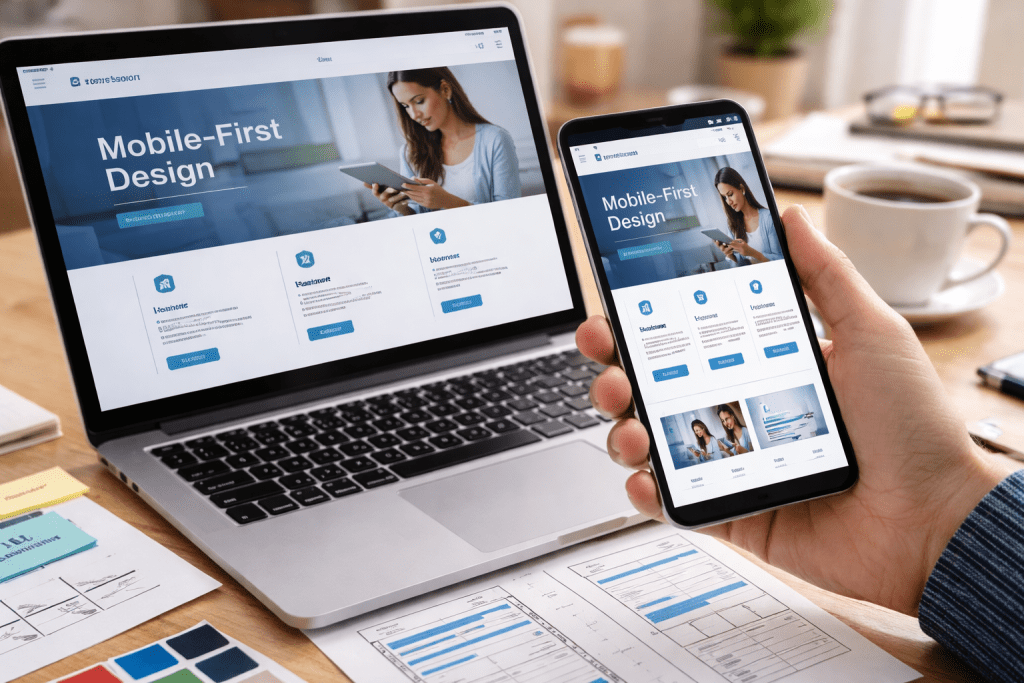
As mobile usage continues to dominate online activity, businesses must adapt their digital strategies to meet users where they are. One of the most effective ways to do this is by embracing a mobile-first design approach, a strategy that prioritizes designing for smaller screens before scaling up to desktops and larger devices.
Mobile-first design ensures that websites deliver a seamless, fast, and user-friendly experience on smartphones and tablets. By focusing on mobile users first, businesses can create streamlined, efficient websites that perform well across all devices while also improving search engine visibility.
In today’s competitive digital landscape, adopting a mobile-first design approach is no longer optional. It is essential for usability, performance, and long-term growth.
What Is a Mobile-First Design Approach
A mobile-first design approach begins with designing the mobile version of a website before expanding it for larger screens. Instead of shrinking a desktop site to fit smaller devices, designers build from the ground up with mobile constraints in mind.
This approach forces teams to focus on what truly matters:
Essential content
Clear navigation
Simple user journeys
Fast load times
By prioritizing these elements early, businesses avoid unnecessary clutter and create a more intuitive experience for users.
Once the mobile experience is optimized, designers can progressively enhance the layout for tablets and desktops, ensuring consistency across all screen sizes.
Why Mobile-First Design Improves User Experience
User experience is one of the biggest advantages of a mobile-first design approach. Mobile users typically have less time and patience, which means websites must load quickly and provide immediate value.
Mobile-first design improves usability by:
Reducing visual clutter
Highlighting key information
Simplifying navigation
Making calls to action easy to find and use
When users can quickly access what they need, they are more likely to stay on the site, engage with content, and complete desired actions.
This approach also ensures accessibility across devices, creating a consistent and reliable experience whether users are browsing on a phone, tablet, or desktop.
How a Mobile-First Design Approach Boosts Website Performance
Performance is a critical factor in both user experience and conversion rates. Mobile-first design naturally encourages faster websites because it focuses on efficiency from the start.
Key performance benefits include:
Faster load times due to optimized assets
Reduced page weight and unnecessary elements
Improved responsiveness across devices
According to Google Page Experience guidelines, faster websites lead to higher engagement and lower bounce rates:
By designing for mobile first, businesses create lightweight, high-performing websites that deliver a better experience for all users.
If you are working on improving performance, you may also find value in our article on website speed and how to improve it, which explores optimization techniques in more detail.
SEO Benefits
One of the most important reasons to adopt a mobile-first design approach is its impact on search engine optimization.
Google uses mobile-first indexing, meaning it primarily evaluates the mobile version of your website when determining rankings. If your mobile experience is slow, cluttered, or difficult to navigate, it can negatively affect your visibility in search results.
Benefits of mobile-first design for SEO include:
Improved search rankings
Better crawlability for search engines
Enhanced user engagement metrics
Lower bounce rates
When combined with strong content and technical optimization, mobile-first design helps businesses attract more organic traffic and stay competitive in search results.
Scaling from Mobile to Desktop with Confidence
One of the biggest advantages of a mobile-first design approach is how easily it scales. Once the core mobile experience is optimized, designers can expand layouts for larger screens without compromising usability.
This method ensures:
Consistent branding across devices
A unified user experience
Fewer redesigns or adjustments later
Designing mobile-first also reduces development complexity. Instead of fixing mobile issues after a desktop site is built, teams start with a strong foundation and build upward.
This approach saves time, reduces costs, and improves overall efficiency in the development process.
How Mobile-First Design Drives Conversions
A mobile-first design approach does more than improve usability. It directly impacts conversion rates by guiding users toward meaningful actions.
When websites are clean, fast, and easy to navigate, users are more likely to:
Fill out forms
Make purchases
Subscribe to newsletters
Request services
Clear calls to action, simplified layouts, and focused messaging all contribute to higher conversion rates.
If your goal is to turn traffic into leads, combining mobile-first design with conversion-focused website optimization creates a powerful digital strategy.
Why Design Is Essential for Modern Businesses
The way people interact with websites has fundamentally changed. Mobile devices are now the primary way users access the internet, making mobile-first design a necessity rather than a preference.
Businesses that embrace this approach benefit from:
Stronger user engagement
Faster website performance
Improved search engine rankings
Higher conversion rates
A better overall customer experience
By prioritizing mobile-first design, companies ensure that their websites meet modern expectations and deliver value at every stage of the user journey.