
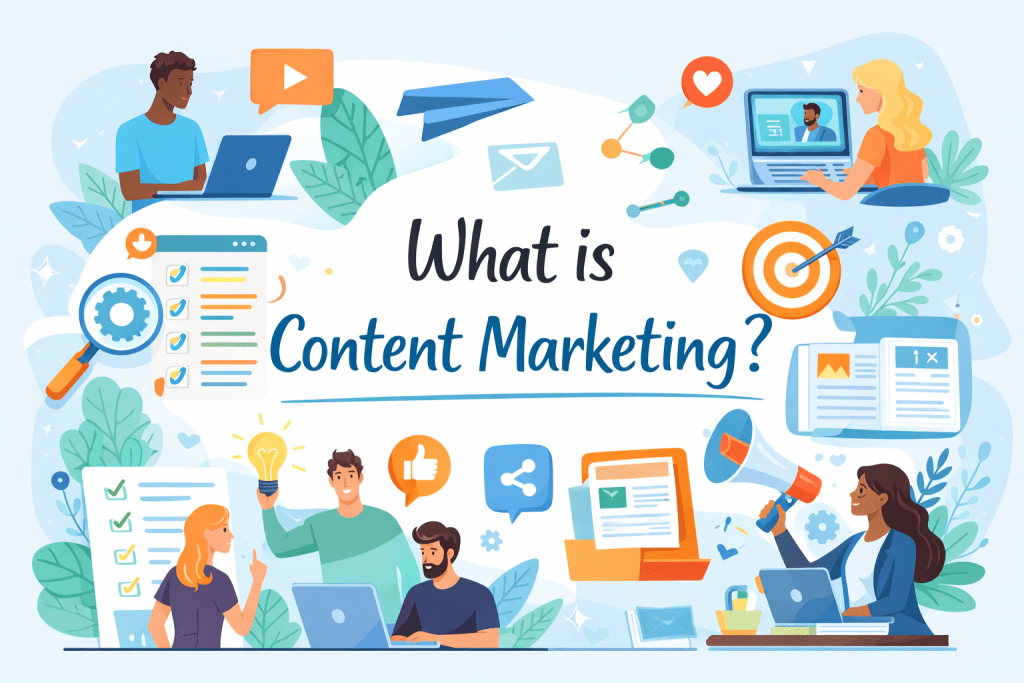
Content Marketing is a strategic approach focused on creating and distributing valuable, relevant, and consistent content to attract and engage a clearly defined audience. Unlike traditional advertising, this doesn’t rely on direct promotion. Instead, it builds trust and authority by providing helpful information that addresses audience needs.
The Content Marketing Institute provides research and insight on how it drives business performance.
The purpose of is to influence customer behavior by delivering value before asking for a sale. When businesses educate, inform, and solve problems through content, they position themselves as credible resources within their industry.
Why Content Marketing Matters
Marketing builds long-term relationships. Consumers increasingly research brands before making decisions, and they prefer businesses that demonstrate expertise and authenticity.
Effective marketing helps businesses:
Increase brand awareness
Drive organic traffic
Improve search engine rankings
Generate qualified leads
Strengthen customer loyalty
Rather than interrupting users with promotional messaging, Content Marketing attracts prospects who are actively seeking solutions.
Types of Content Marketing
Marketing includes multiple formats, each serving a specific purpose within the customer journey.
Blog Posts
Blogs drive organic search traffic and establish industry authority.
Videos
Video content improves engagement and simplifies product demonstrations or storytelling.
Social Media Content
Short-form posts, graphics, and videos increase brand visibility and interaction.
Infographics
Visual content presents complex information in digestible formats.
eBooks and Whitepapers
Long-form content positions brands as thought leaders and attracts highly qualified leads.
By using multiple formats strategically, businesses strengthen reach and engagement across platforms.
The Importance of Consistency
Consistency is one of the most important elements. Publishing sporadically rarely produces meaningful results. A steady flow of relevant content reinforces brand identity and builds audience expectations.
Consistency improves:
Audience retention
Search engine visibility
Brand recognition
Engagement rates
Over time, this compounding effect strengthens digital presence and credibility.
Marketing and SEO
High-quality, keyword-optimized content improves visibility in search results and attracts organic traffic.
Search engines reward:
Relevant, in-depth content
Clear structure and headings
Mobile-friendly design
Fast loading speed
Businesses that align SEO best practices generate sustainable traffic growth.
How Content Marketing Influences Buying Decisions
Content Marketing meets audiences at different stages of the funnel.
Awareness stage: Educational blog posts and videos
Consideration stage: Case studies and comparison guides
Decision stage: Testimonials and detailed product information
When prospects repeatedly find value in your content, they are more likely to trust your brand and choose your business when ready to purchase.
The Long-Term Value of Content Marketing
Content Marketing creates assets that continue delivering results over time. Unlike paid ads that stop producing traffic once budgets pause, well-optimized content attracts visitors long after publication.
Each piece of content becomes part of a larger ecosystem that drives visibility, engagement, and conversions. Businesses that invest consistently in Content Marketing build scalable and sustainable growth.