
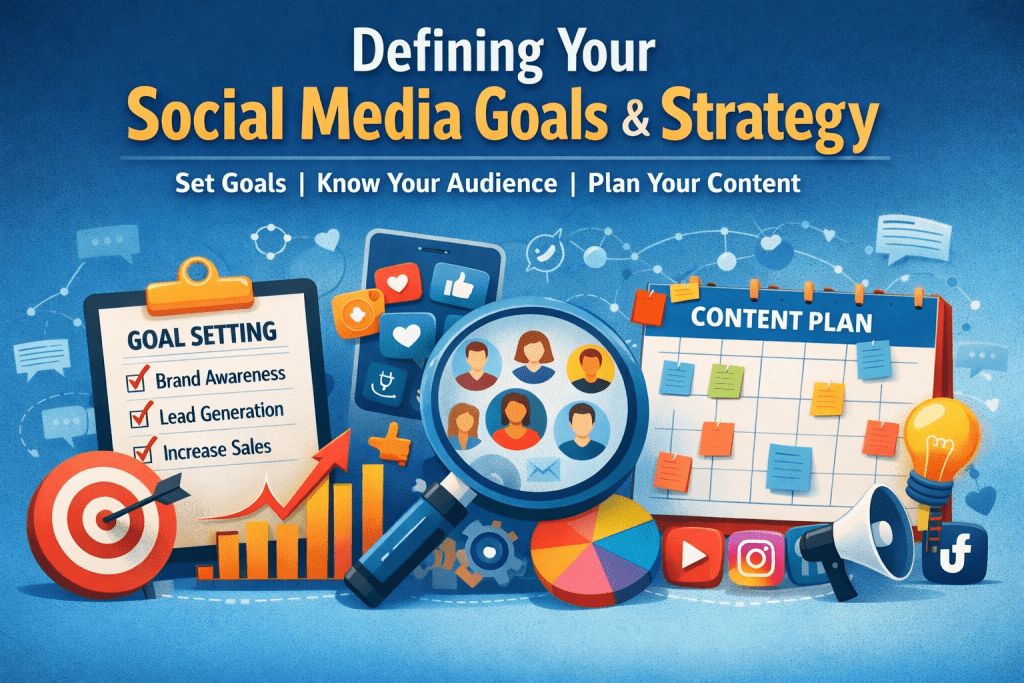
Before building a social media content calendar, you must first define your social media goals and develop a clear social media marketing strategy. Without this foundation, your content may feel inconsistent, reactive, or disconnected from your broader business objectives. A well-defined strategy guides what you post, when you post, and which platforms deserve your attention.
Set Clear and Measurable Social Media Goals
Effective social media marketing starts with specific, measurable goals. These goals should align directly with your overall business objectives. Common social media goals include:
- Increasing brand awareness
- Growing followers and engagement
- Generating qualified leads
- Driving website traffic
- Boosting online sales
- Building customer loyalty
Each objective requires a different content strategy. For example, increasing brand awareness may involve high-reach video content and shareable graphics, while generating leads may focus more on educational posts, gated content, and clear calls to action.
To improve ROI, use measurable metrics such as engagement rate, click-through rate, conversions, and follower growth. Tracking key performance indicators ensures your social media efforts remain aligned with business growth.
Understand Your Target Audience
A successful social media strategy depends on a deep understanding of your target audience. Before creating content, define who you are trying to reach. Consider:
- Age range and demographics
- Geographic location
- Interests and online behaviors
- Buying habits
- Preferred content formats
Audience research helps you create content that resonates. For example, short form videos may perform well with younger audiences on TikTok or Instagram Reels, while professional audiences often engage more with educational content and thought leadership posts on LinkedIn.
Understanding audience behavior also improves posting frequency and timing. Reviewing platform analytics can reveal when your audience is most active, allowing you to optimize scheduling for maximum engagement.
Choose the Right Social Media Platforms
Not every platform fits every business. Aligning your social media goals with audience behavior allows you to prioritize the most effective channels.
- Instagram and TikTok often perform well for visual brands and younger audiences.
- Facebook remains strong for community engagement and local businesses.
- LinkedIn is ideal for B2B marketing and professional services.
- YouTube supports long form educational content and product demonstrations.
Focusing your efforts on the right platforms improves efficiency and ensures stronger returns on your content marketing investment.
Develop a Clear Content Strategy
Once goals and audience insights are defined, you can develop a structured content strategy. Every post should serve a purpose. Content typically falls into one of three categories:
- Educational content that builds authority
- Entertaining content that increases engagement
- Promotional content that drives conversions
Balancing these content types keeps your feed valuable without overwhelming followers with constant sales messaging.
A strategic social media plan also includes content themes, posting frequency, and a clear brand voice. Consistency builds recognition and trust over time.
Align Strategy with Business Growth
When your social media goals, audience insights, and content strategy work together, your content calendar becomes purposeful rather than random. Each post contributes to a larger objective, whether that is growing visibility, nurturing leads, or increasing revenue.
Defining your social media marketing strategy early improves content efficiency, strengthens engagement, and ultimately drives better return on investment. Instead of guessing what to post next, you will have a clear roadmap that supports long term growth.