
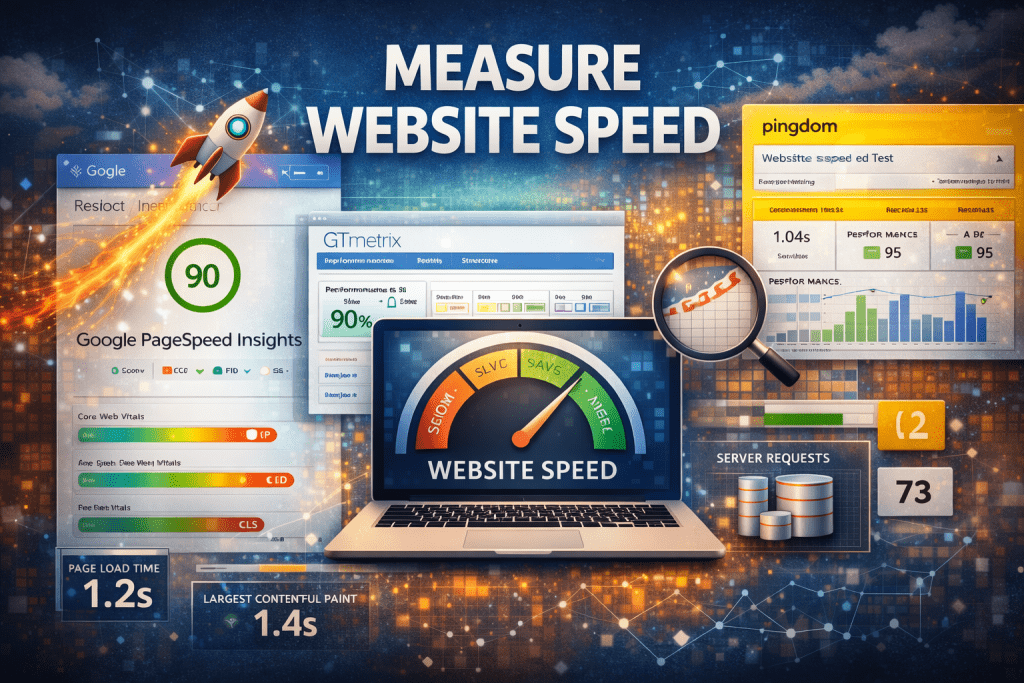
If you want to improve your website speed, the first step is measuring how your site currently performs. Without accurate data, it is impossible to know what is slowing your pages down or how performance issues are impacting user experience, SEO rankings, and conversions.
Website speed testing tools provide detailed insights into page load time, performance bottlenecks, and optimization opportunities. By consistently measuring website speed, businesses can identify issues early, implement improvements, and maintain a fast, high performing website.
Why Measuring Website Speed Matters
Before making changes, you need benchmarks. Measuring website load time gives you:
- A clear understanding of how fast your pages load
- Insight into what elements are slowing your site down
- Data to improve SEO performance
- Metrics to increase conversion rates
- A baseline to track improvement over time
Search engines factor site speed into rankings, and users expect pages to load quickly. Regular speed testing ensures your site stays competitive in both areas.
Use Google PageSpeed Insights
One of the most widely used website speed testing tools is Google PageSpeed Insights. It analyzes your web pages on both mobile and desktop devices and provides a performance score along with actionable recommendations.
PageSpeed Insights evaluates key metrics such as:
- Largest Contentful Paint
- First Input Delay
- Cumulative Layout Shift
- Overall page load performance
It also highlights specific files, scripts, and images that may be slowing your site down. This makes it easier to prioritize fixes that will have the biggest impact on performance and SEO rankings.
For businesses focused on search visibility, this tool is especially important because it reflects how Google evaluates page experience.
Analyze Detailed Reports with GTmetrix
GTmetrix offers a deeper technical breakdown of website performance. In addition to reporting overall load time, it provides:
- Total page size
- Number of server requests
- Performance grades
- A detailed waterfall chart
The waterfall chart visually shows how each resource loads, including images, scripts, stylesheets, and third party tools. This helps identify specific bottlenecks such as large image files, render blocking scripts, or slow server response times.
For developers and marketing teams working together, GTmetrix provides the technical clarity needed to make informed optimization decisions.
Test Global Performance with Pingdom Tools
Pingdom allows you to test your website speed from different geographic locations. This is especially useful if your business serves national or international audiences.
A site that loads quickly in one region may perform slower elsewhere due to server location or content delivery issues. Testing from multiple locations helps ensure a consistent experience for all users.
Pingdom also provides performance grades and recommendations to improve load time, making it a practical tool for ongoing monitoring.
Key Website Speed Metrics to Monitor
When measuring website performance, pay attention to these important metrics:
- Page load time
- Time to first byte
- Total page size
- Number of HTTP requests
- Core Web Vitals performance indicators
Tracking these metrics consistently helps you understand how technical changes impact real world performance.
How Often Should You Test Website Speed?
Website speed should not be measured once and forgotten. You should test performance:
- After major design changes
- After installing new plugins or scripts
- After adding large media files
- Before launching paid advertising campaigns
- On a regular monthly basis
Frequent testing ensures your site remains optimized as content grows and technology evolves.
Turning Data Into Action
Measuring website speed is only valuable if you act on the results. Common optimization steps include:
- Compressing and resizing images
- Enabling browser caching
- Minimizing CSS and JavaScript files
- Reducing unnecessary plugins
- Using faster hosting or a content delivery network
By combining insights from Google PageSpeed Insights, GTmetrix, and Pingdom, you gain a complete picture of your website’s performance. This allows you to prioritize improvements that enhance user experience, boost search engine rankings, and increase conversion rates.
Final Thoughts on Measuring Website Speed
Understanding how to measure website speed is essential for maintaining a high performing website. Regular testing provides clarity, accountability, and direction. When you consistently monitor load times and act on the data, you create a faster, more reliable experience for visitors.
In a competitive digital landscape, speed is not just a technical metric. It is a strategic advantage that supports SEO growth, stronger engagement, and higher conversions.
One Response