
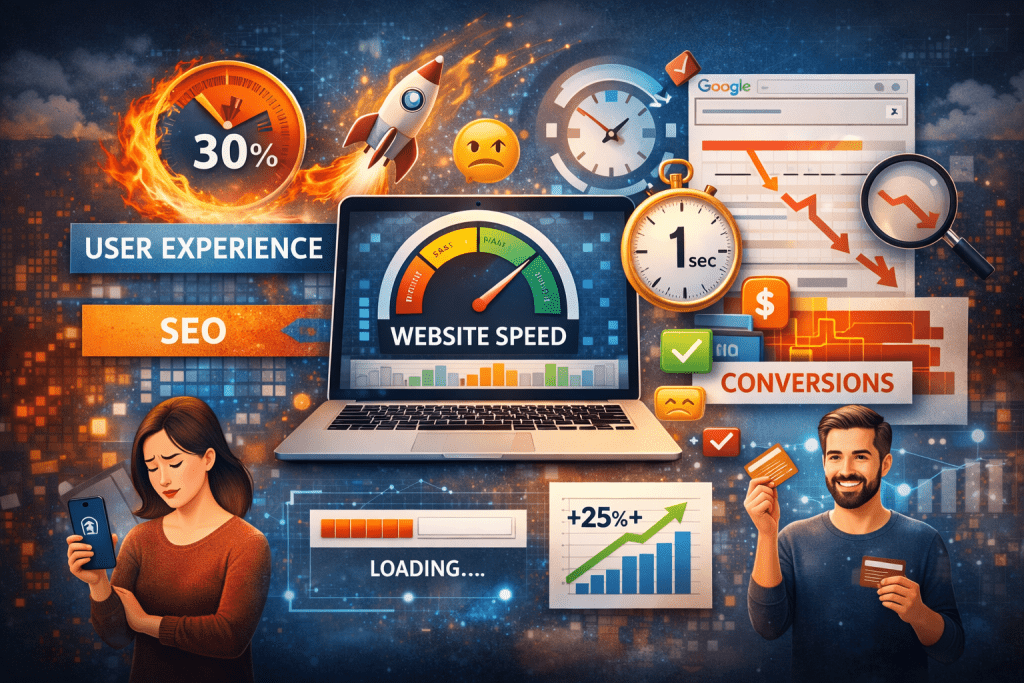
Website speed is no longer a technical nice to have. It is a critical factor that influences user experience, search engine visibility, and conversion performance. How quickly your website loads directly shapes how visitors perceive your brand and whether they choose to stay, engage, or leave.
In today’s digital environment, users expect instant access to information. When a page takes too long to load, frustration sets in quickly. Studies consistently show that most users will abandon a site if it does not load within a few seconds. Once they leave, they rarely come back. A fast website, on the other hand, encourages visitors to stay longer, explore additional pages, and interact more meaningfully with your content.
Website Speed and User Experience
From a user experience standpoint, speed equals satisfaction. A fast website feels smooth, reliable, and professional. Pages load quickly, navigation feels effortless, and users can find what they need without interruption.
When a site is slow, even high quality content can be overlooked. Visitors may never reach your messaging, products, or calls to action if pages stall or fail to load promptly. Faster load times reduce bounce rates, increase time on site, and improve overall engagement. These positive signals indicate that users are having a good experience with your brand.
How Speed Impacts SEO
Website speed plays a significant role in search engine optimization. Search engines, especially Google, prioritize websites that deliver fast and seamless experiences. Slow loading pages signal poor performance and can negatively affect how a site ranks in search results.
Faster websites are easier for search engines to crawl and index efficiently. When your site loads quickly, search engines can process more pages, which improves overall visibility. Better rankings lead to more organic traffic, higher click through rates, and more opportunities to reach potential customers.
Website Speed and Conversion Rates
Speed has a direct impact on conversions. Whether your goal is form submissions, phone calls, purchases, or bookings, page load time plays a major role in user decision making.
A fast website keeps users focused on your message and reduces friction in the conversion process. Even a one second delay can disrupt momentum, introduce doubt, and cause users to abandon their journey. Faster load times create smoother paths to action, which leads to higher conversion rates and stronger return on investment.
Website Speed Builds Trust and Credibility
Users subconsciously associate speed with quality. A responsive website signals professionalism, reliability, and attention to detail. Slow or unresponsive sites can create doubt about a business, its services, or its ability to deliver.
Trust is especially important for first time visitors. When your website loads quickly and performs consistently, users are more likely to view your business as credible and dependable. This trust makes it easier to turn visitors into leads and customers.
Making Speed a Priority
Improving website speed is not just a technical upgrade. It is a strategic investment in user experience, search visibility, and revenue growth. Optimized images, clean code, efficient hosting, and performance monitoring all contribute to faster load times and better outcomes.
By prioritizing website speed, businesses create smoother experiences, improve search rankings, increase conversions, and build stronger relationships with their audiences. In a competitive digital landscape, speed is not optional. It is essential for long term success.